PRESENTED BY
Dr Muhammad Mujtaba Abdulkadir
School of Undergraduate, Islamic Studies Department
A D Rufa’I College for Legal and Islamic Studies Misau, Bauchi State
0806735412, mujtabaabdulkadirjahun@gmail.com
Dr Ibrahim Sulaiman Galadima
School of Undergraduate, Islamic Studies Department
A D Rufa’I College for Legal and Islamic Studies Misau, Bauchi State
08063993225, eljahuny210@gmail.com
A PAPER PRESENTED AT 1ST (MAIDEN) NATIONAL CONFERENCE
HELD ON 31ST March – 3RD April 2020
AT
UMARU MUSA YAR’ADUA UNIVERSITY KATSINA, KATSINA STATE
ABSTRACT
Scholars had often established fully teaching activities in the field of Islamic and Arabic studies, according to time and ability. They have rendered their contributions in teaching profession upon time to their communities and through this they secured the classical mode of Islamic and Arabic teaching and learning, in spite some challenges. their endeavor offered additional ground in planting the specialization in Islamic and Arabic scholarship in different places in Northern Nigeria prior to and after Shaykh Uthman bn Foduye’s Jihad, till today their roles is been witnessed through Tsangaya and Zaure system of education by using traditional pedagogy through classical activities. The functioning of the system necessitates the possibility of formalizing such legacy left to the later generation.
This topic precisely shades light on the features of traditional Islamic education and possible ways to be followed in formalizing its pedagogy and curriculum for upgrading as an established system for learning Islamic and Arabic studies. The outlined solutions in this research may contribute in harnessing together to drive the policies upon which Government may wish to adopt because such centres is a place for acquiring both Islamic and Arabic knowledge serve like a department in modern university faculties. This, as an attractive system of learning is adopted in most of Northern States thus, it became a legacy to be maintained and upgraded based on time and climate change
INTRODUCTION
Islamic Education System aims at bestowing human kind kindness and intellectuality.[1] Islam emphasizes acquisition of knowledge for the well being of its adherents. Islamic Education therefore, is an established system of scholarship that developed simultaneously with the spread of Islam since its introduction in West Africa, in general and Northern Nigerian protectorate in particular.[2] The transformations and development of Islamic education in the northern Nigerian can be seen by laying emphasis on the remarkable impacts that it has made on the intellectual growth of the people in respect of development of scholarship within the area and beyond.[3]
BRIEF ON NOTHERN NIGERIA
Northern Nigeria area consist different ethnics and religious groups with diverse culture. [4] The Hausa, Fulani and some tribes dominated much of the area, especially the western and central parts of the country, who are chiefly Muslims, and despite the fact that there are Christian inhabitants in the area, the Hausa/ Fulani culture is in dominance. The major languages of the area are; Hausa, Fulfulde, Kanuri, Igala, Nupe, Gwari, Birom, Jukun and Katab.[5]
The area became well established in 1897 C.E, and as a result of that, the people of the area developed and used a modified Arabic script knows as Ajami, with which they wrote and recorded their own language and other sciences. By that, they also recorded and compiled several written documents.[6] The eminent revivalist of West Africa Shaykh ‘Uthman bn Foduye was from the area who led the Islamic Jihad and united the people of the area under an established caliphate known as the ‘Sokoto Caliphate’, and was nominated as its first leader, bearing the title ‘Amir Al-Mu’minin’ (the commander of the faithful).[7] The territory was further divided into autonomous emirates, headed by Traditional leaders known as the Emirs. The area is described thus:
The highest point in Northern Nigeria is Chappal Waddi at 2,419 m (7,936 Ft); the main rivers are the Niger and the Benue. The expansive Valleys of the Niger and Benue River Valleys dominate the southern areas of the country, also hills and mountains dominate Mambilla and plateau in the area, the area experiences rainfall between 20 and 60 inches (508 and 1,524 mm) per year.[8]
The British explorers came into the northern Nigeria in the mid of 19th Century for trade relation that revolved around the expansion of the Royal Niger Company,[9] and the area was later amalgamated to the south after the invasion of the area by the Colonialists, and finally granted independence on the 15th march 1957.[10]
Consequently, before the arrival of the Colonialists and the introduction of Western Educational System, there was in existence Islamic civilization and the practice of Islamic culture as well as traditional Islamic Education that was normally held at Masjids and then Zawayas[11] were developed as independent centers of Islamic learning across the area. Islamic education and learning of Arabic Language remain the chief interest of the people in Northern Nigeria.
ISLAMIC EDUCATION
Islamic education brought along with Arabic learning, Arabic is the language of the Qur’an and was therefore perceived as having great spiritual value.[12]
These two main fields of study were being taught in the early traditional Islamic schools, and those who study in such schools were given recognition by all members of their communities. That even with the development of the later conventional schools, the system was gradually formalized to meet the requirement of the day, hence gave birth to the development of various Islamic and Arabic school system in the study area.[13] But, due to the formalization of the system and its effectiveness on those who graduated from it, led to the formal recognition of the system by the government and those who obtained certificates from such schools were employed as teachers and administrators.[14]
According to this research, this is because the traditional Islamic schooling is among the basic system of living in Northern part of Nigeria, in which whether there is formal school or not, the traditional school system helps the Northern people to be literate and acquire knowledge through it, since the arrival of Islam to the area. Thus, it deserves to be a field of specialization even in formal system of education on this regard.
However, before the introduction of the formal system of Islamic education, there was no defined syllabus taught or curriculum in traditional system, which contain of a guide for teaching and learning in those schools, rather students were taught of some specific Islamic books, which the content of such books will be treated before Malam, from beginning to the end, with the student reading and the teacher translating and explaining. This is the method employed in teaching at the traditional Islamic schools that existed in the Northern Nigeria, which is regarded as the advanced level in the oldest Makarantun Ilimi.[15]
In spite of this development, many Northern Muslims maintained the traditional system of Islamic learning to 1960 which last to date, and still continuing even after formalizing it. While to those who are in support of the new system, are seeing it as an alternative to the old system, and for that, many different Islamic and Arabic subjects were incorporated into the system and are being taught, side-by-side with other conventional subjects and many Muslims today have specialized in various fields of this discipline. [16]
SOME COURSES TAUGHT IN BOTH TRADITIONAL AND FORMAL ISLAMIC INSTITUTIONS OF LEARNING
The development in fusing Islamic sciences into formal system of education, led to the introduction of some Islamic and Arabic courses to be taught in these conventional schools. Some of these courses are:
- a) The Qur’an: This to enable an individual to understand the Qur’an properly in its various fields such as Tafsir and Qira’at among others.
- b) The Hadith: Hadith which is also considered as the second most important after the Qur’an, is also being taught in order to give guidance to Muslims in nearly all aspects of life and their religious activities.
- c) Fiqh (Jurisprudence): This represents the theory of law (Shari’ah) and every Muslim is expected to know something from it. It is not therefore only limited to intending jurist alone, but also to introduce Muslim to the wisdom and philosophy behind some religious rites in Islam.
- d) Arabic literature: This consists of Arabic verse, grammar, syntax, etymology and rhetoric.
- e) Theology: consist of explanations of basics of Islamic doctrines of Tauhid (Oneness of Allah).
The philosophy behind maintaining these subjects is to make Muslims to be keen in their religious knowledge and be morally ground to allow them to be pious and righteous. Thus, our fore-fathers sensed the advantages of the western formal schools system, yet, they were so meticulous in accepting the system in its entirety at the expense of religious one, thereby insisted that such system must be made in the manner that religious impact must be felt.
In the process of reviewing the collected data of this work, it was observed that, the Northerners did not intemperance with formal system of education, neither under pricing it, for it may be useful to them for worldly living, despite the fact that they are aware of that the classical Islamic teaching comprises so many things of human needs as they learnt, and nothing was neglected from the book of Allah. Thus, they surveyed before admitting the formal system.
Islam is not only a religion but to them is a system that matches all system of life, that include religious, education, social among others, thus it says:
Islam appreciates the high degree of change that characterizes any given society. Therefore, it strives to teach its members the tools with which they can equip themselves to cope with the ever changing society. All learning must be put into practice otherwise the individual in question is not learned.[17]
This is the main feature of the traditional Islamic teaching system which made it to last long, while believing in Allah’s reward as an act of Ibadah as it was reported in the prophetic tradition which says:
The best man among you is one who learns the Qur’an and then cares to teach it.[18]
THE CHANGES AND DEVELOPMENT IN ISLAMIC EDUCATION IN NORTHERN NIGERIA AFTER THE ARRIVAL OF COLONIALIST TO DATE
At the arrival of the Colonial Masters, they learnt that Northern people, were oriented with the divine knowledge and their strong belief in it has made it to be their source of intellectual activities and inspiration in all parts of their life. The colonial masters therefore made their possible plans to see that they had interrupted the existing Islamic Educational System, because if they were to allow it to continue, then what they had brought will never be accepted by the people of the North. Therefore, they noticed a window through which they would penetrate the area, and quickly they planned for transmission.[19]
This research held the views that, colonialists plan was not only to transmit classical Islamic knowledge, to the extent that Northerners will benefit from their plan, but it’s a plan to establish missionary programme in the Northern region as they did to southern region, in working for their churches, as Mango Park did, and according to their plan as was drafted in “Al Tansir Khuttah li ghazwi al Alam Al Islami”.
The Northern leaders, at that time, were planning for formalizing the traditional Islamic school system, the Colonial masters had used their power and dominated everything, and refused to allow such formalization to be complete, and instead, the traditional Scholars noticed some changes in their traditional educational system, which began to take another shape, as stated by Tudun Nufawa.[20]
Many religio-cultural activities of the area were begun to be distorted and Islamic teaching and learning were quick to be swept by the conventional modern educational system of schooling. A situation that had forced such scholars to staunchly upheld the traditional system of education as well as maintaining the scholarly homes which was belief to be the basic foundation of Islamic learning and its development.[21]
The Colonialists had initially intended to modify the classical method of Islamic teaching due to some problems they highlighted as reason for the backwardness of the North academically. These according to them were:
- Poor conditions of service of the teachers.
- Lack of good school building.
- Lack of government recognition.
- Lack of formal control.[22]
These few excuses led the Colonial Masters to establish what can be called modernization of the traditional classical Islamic school system, by incorporating only few subjects of Islamic and Arabic Studies in the curriculum to just form what is known today as formal Islamic in Western Educational System.
THE ROLE AND CONTRIBUTIONS OF NORTHERN LEADERS IN THE DEVELOPMENT AND FORMALIZING OF ISLAMIC EDUCATION IN NORTHERN REGION
Sir Ahmadu Bello, the first Northern premier, together with some dedicated Northern elites, stood firmly for maintaining the traditional Islamic system of learning and at the same time optimized the use of the formal Islamic educational system initiated in North by the Colonial Masters. Thus, the effort of the colonialist as this research finds out, were tend to make the traditional institution a history, that will be mentioned in here say or even distort it, if not because of some leaders sacrificed to stand still in preserving such system.
For instance, Tudun Nufawa,[23] emphasizes that, among the people who were zealous in formalizing and modernizing the Islamic Educational System were; Emir of kano, late Alhaji Abd’Allah Bayero, Waziri Gidado of Kano, Wali Sulaiman, Malam Aminu Kano, Malam Sa’ad Zungur and Malam Mu’azu Hadejia. All of whom propagated the magnitude of the importance of classical Islamic Education towards the development of individuals and the society at large and vehemently criticized the colonial negligence towards undermining it importance to human development.[24] Al-Ilori,[25] also expounds that Arabic and Islamic studies remained in existence with the effort of some leaders whom among were Emirs, scholars and Zealous dignitaries of the Northern region and formal Arabic school was established at Kano in the year 1934 CE, teachers were recruited from Sudan and Egypt. These efforts according to him contributed to the establishment of centers for Arabic and Islamic studies at Abeokuta and Agege from 1952-1955 CE.
This research understand that, after formalizing the Islamic education, nowadays formal Islamic school attempting in occupying the traditional mode of teaching, which some students of modern Islamic studies loses contact with classical system of learning, which caused backwardness in vast learning of classical Islamic books. Something that has made some student ignored the position of traditional Muslim scholars, and look at their system of education as an outdated discipline, which has no basis or origin in Islamic teaching and learning. This is a contrary understanding from them.
The idea of formalization of Islamic Education from classical traditional system to modern conventional one, without neglecting the core objectives of Islamic purpose of learning and teaching was a grand one. The learning system got boosted despite the fact that its stigmatization still remained in the heart of traditional Muslim scholars in the Northern area.
Prior to the independence, the same struggle was said to have been extended to various areas of the North by the efforts of many Northern elites, Bauchi province inclusive.[26] This led to the promotion of the formal system of Islamic education under the establishment of a National Board of Arabic and Islamic Studies (NBAIS) which was founded by Alhaji Sir, Ahmadu Bello, and Sardauna of Sokoto in 1959-60.[27] The board was later attached to the Institute of Education Ahmadu Bello University, Zaria in 1968/1969.[28]
This led to the spread of Islamic Formal Educational system in most of the areas in general, and Bauchi in particular. In Bauchi, for instance, it was started as an adult Arabic and Islamic class in some areas, under the effort of some scholars of the area such as the late grand Qadhi Abdulmalik Bappa Mahmoud, Dr. Aliyu Abubakar, Shaykh Arabi, Malam Hamidu Sarkin Zungur to mention but a few. This effort was later formalized to a college for higher Islamic studies by Ustaz Musa Ibrahim Sagagi.[29] This was maintained also in the 1980’s.[30]
POSSIBLE WAYS TO ADOPT FOR THE UPGRADE AND MAINTAIN OFISLAMIC EDUCATION
These scholars worked in saving the future of Islamic teaching and learning in Bauchi area with the zeal for securing the classical institutions and maintaining the modern ones at the same time. They are all Zaure products having civilization, despite the fact that some had attended formal schools, according to findings of this research.
With all these, Islamic Educational System continued to develop in Northern Nigeria, and it continues to receive various contributions from different scholars till today, and it present position cannot said to have reached its present climax without the efforts of scholars from both the traditional system of education and the modern formal system.
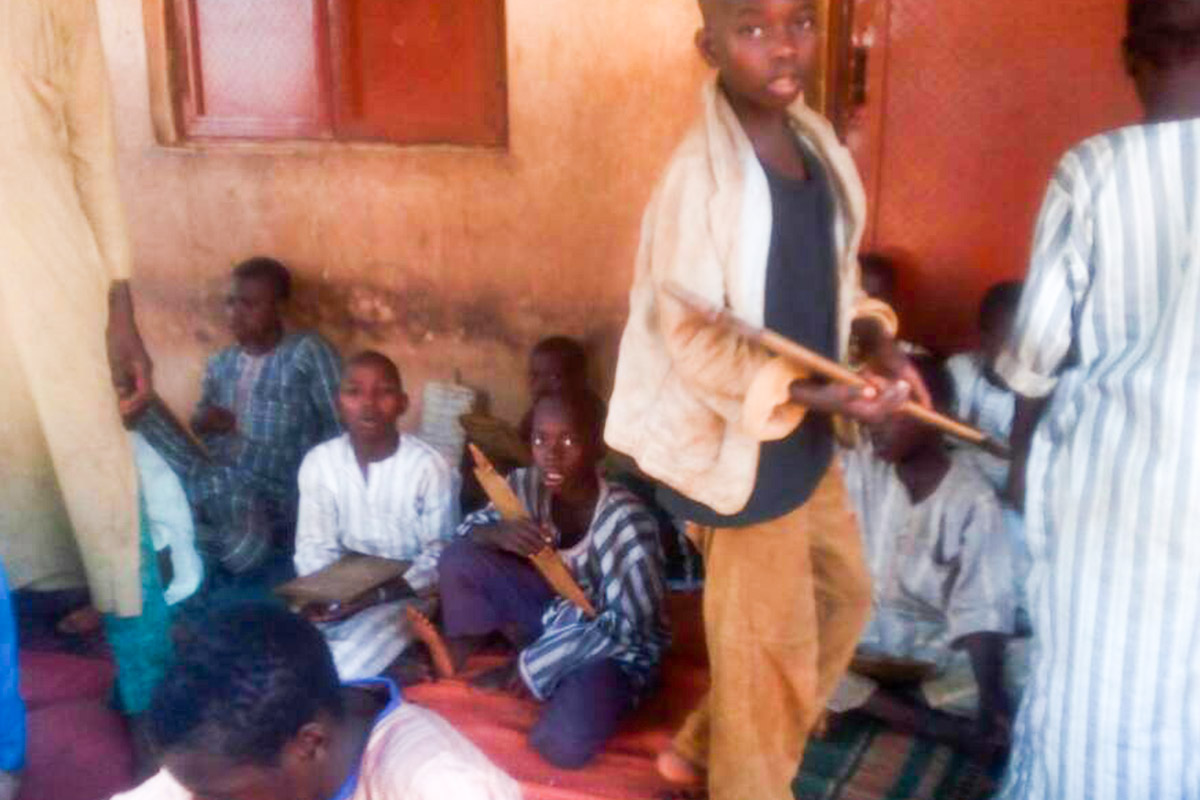
Upgrading of traditional Qur’anic leaning centres known as Tsangaya/Allo school should be a cautious and gradual process. The paper identified some key factors that need to be addressed in the upgrading and maintenance of traditional Qur’anic learning centers. The researcher observed that:
- Solely, the researcher opines that for the upgrade to be meaningful, it has to be spearheaded by the government.
- In addition, it should have general acceptability and must conform to modern systems of running an institution of learning and have the right structures in place amongst others. These key factors includes;-
- creation of formal curriculum and syllabus for the traditional learning centers
- recognition of the Tsangaya/Allo system of learning
- classification of attainment and certification
- feeding as it is taken place at governments primary schools
SAMPLE OF SUGGESTED FORM OF CURRICULUM/SYSLABUS FOR ZAURE AND QUR’ANIC CENTRES OF LEARNING
Mostly, Zaure system has no formal and documented syllabus or curriculum, but looking at the Zaure system and the state of how Ulama are imparting knowledge through some specific text books on some subjects the researcher is of the view that, the traditional teaching and learning system has a syllabus.[1] Only that it needs to be reviewed and arranged. The research outlined a series of some books Zaure used to be covered chronologically at Zaure by students during learning Such as Qawa’idi AL Ahdari, Ishmawiy Iziyyah Risalah, Askari, Ashalu and Mukhtasar in jurisprudence (Al Fiqh), Also Al Aqidah al Murshidah, Jami’ al ubad, Sharh umm Al barahin and Hashiyah al Dasuqi in Tauhid as well as Al arba’un al nawawiyyah, Tanqih al qaul al Hathith, Mukhtar Al Ahadith, Bulugh Al Maram in Haduth study, up to some advance Islamic text books is being taught among others. Gada explained on the uniform curriculum and the methodology of such system as well as the basis of curriculum of Islamic centres of learning. Scholars, writing on the curriculum of the Qur’anic Centres of learning right from the earliest time, did not go out of this context. Although, the curriculum in the Islamic Centres was uniform throughout the region and throughout the period, it did not remain static.[2]
The traditional system of Islamic education always deals with the whole content of a book, while the modern curriculum system selects topics or portions from the courses or field of specialization. The art of teaching and reading of whole text books in Zaure may be related to the mode of learning Qur’an, which is aimed at reading and learning the whole book completely. These made great impact on Zaure system of teaching and learning. Zaure proprietors considered the cover to cover reading as an act of worship; this may be among the factors that made the early traditional Muslim scholars hesitate from composing modern modes of teaching in the Zaure system of education.
In Tsangaya and Allo school the following can be utilized as a implemented in Malam Abdulkadir Islamic Resource Centre Bauchi Islamiyyah and Allo section traced through their school/Madrsah profile, Thus;
- A minimum of half of a Qur’anic page and maximum of 2-3 Qur’anic pages or minimum of one thumun (sumuni) and maximum of 3-4 thumun (sumuni) will be put in written on a student slate (Allo) which is like a required credits for a student after every 1 or 2 days defend on his intellectual capability and ability up to his graduation which may take him to spent only three years to graduate.
- Extra lesson after normal lesson is being practiced, but it is optional as an elective to enable student arrived at a destination more especially to some who are not in boarding because they are attending (boko).
- Each full-year attendance equals 15 or 20 Hizbs as a total credits load per year. Every student must attempt a minimum of 7, 10 or 20 Hizbs each year. Note that students are encouraged to go as far as they possibly can in each time. Those wishing to attend any formal school we encouraged them even if they came back for vacation they should attend the Madrasah (school).
SUGGESTIONS AND RECOMMENDATIONS
The following was suggested as a recommended by the researcher, thus:
- Governments should establish a commission purposely for traditional Zaure and Tsangaya/Allo school.
- Governments should advisably co opt experts who have relevant qualification to be assigned as overseer to such centres/schools
- The emirates in which the Qur’anic scholars lived and or living should collaborate with modern Muslim scholars who have classical experience to acquire more advice to go with modern days.
- State Governments should take active role in supervising the activities of traditional Qur’anic schools in the areas by giving them any possible re-enforcement and continue to assist Alarammas (with even mega amount of salary or allowances) in Tsangaya/Allo school.
- Scholarly written manuscripts should be given due regards and gathered for researcher consumption as well as forming section in a states or National libraries to save them from alteration or loosing.
- Alarammas and their students should be allowed to attend Qur’anic competition based on their type and system of learning which can be monitored by the higher learned scholars belong to the system or introduce Qur’anic writing competition for such types of products, based on government and experts regulations.
- Such scholars and their endeavors need careful recognition, they should not be neglected because they are helping government by engaging in war again illiteracy
- The successors of such traditional Zaure and Tsangaya/Allo schools especially those working in higher institutions should bring awareness to those who were left behind.
- Tsangaya owners should be equalized in welfare given to citizens, to enable them have self depend or give them reimbursement based on qualification/grade related to the field of study according to what government design for them.
- Students at tsangaya and classical Islamic schools were not among children out of school if the system will be improve and upgrade through establishing good atmosphere of learning and providing well structured buildings
- Introduce the product to ICT and some relevant field of modern knowledge based on climate changes and impacts.
CONCLUSION:
Zaure (Scholarly homes) and Tsangaya/Classical Qur’anic Scholars and their centres deserves government intervention at various levels, to motivate them, in teaching their people, for they have right to earn the assistance which is being offered to citizens engaged in teaching and learning from national, state and local government levels in order to avoid begging (bara) activities in the system, more especially now that Federal government provided a board for Islamic and Arabic studies. Zaure and Tsangaya/Allo schools system is a vast educational program that revives Muslims children at some areas, thus; the proprietors deserved all the necessary supports from the communities, governmental and non-governmental organizations. Initially some scholars have a farm in which they generate their food as well as local self manufacture business. By doing so, the Zaure and Tsangaya/Allo schools would be properly developed and preserved as well as doing away with artificial poverty and begging attitudes in the midst of some Northern region.
WORK CITED
[1] Internet, Wikipedia, wiki, Northern-Region – Nigeria.com, retrieved on 23rd Aug. 2015.
[2] Ibid.
[3] A. Babs Fafunwa ,History of Education in Nigeria, NPS Educational Publishers Limited, Ibadan 2oo4, p.59
[4] Op.cit.
[5] www.nothernnigeriatourism.com> nnt
[6] Op.Cit.
[7] Internet,Wikipedia,wiki>Nothern-Region-Nigeria.com
[8] Ibid.
[9] M.A. Mkpa, Overview of Educational Development: pre-colonial to present day,(online Nigeria community portal of Nigeria)Internet,23rd Aug.2015.
[10] Ibid.
[11] Zawaya is an Arabic plural of the term Zawiyah which also refers to a center of learning.
[12] .Op.Cit.
[13] Y.I.Yero,,Alharakah al Islamiyyah wa Al Arabiyyah fi Madinat Bauchi,min Sanah 1978-1988,(B.A.Project) Unijos,1989,p.61-73.
[14] K.A.Tudun Nufawa, Al nathr Al Arabiy an Nigeriy,Darul ummah,kano,2011,p.125-129.
[15] Oral Interview with Sa’id Hamid Bello, Current district head of Zungur Distric Bauchi L.G.A. on 12/9/2015 by 5:25 pm.
[16] A. O. Enoh, et-al, Educational Foundations in Nigeria, Challenge Press, Jos, 1987, p.38.
[17] N.T.I, N.C.E (Education Module 1,Year 1) course book, pub.N.T.I.Kaduna,2007,p.16.
[18]. Albukhari, S.A.Alhashimiy, Mukhtar al ahadith al nabawiyyah wa al hikam al Muhammadiyyah, Dar al fikr,Beirut,2011, p.66.
[19].wikipedia>wiki>northern-region-nigeria.com(23/8/2015).
[20].k.A.Tudun Nufawa, Al nathr Al Arabiy Al Nigeriy,p.118.
[21].A.R. Muhammed,History of the spread of islam in the Niger-Benue Confluence Area: Igalaland,Ebiraland and lokoja c. 1900-1960,Ibadan uni.press,2014, p.115-121.
[22].A.O.Enoh and others, Educational foundations, Nigeria by challenge press,jos,1987,p.42.
[23].K.A.Tudun Nufawa, p.118
[24] Kabiru Adam Tudun Nufawa, Al-Nathr AL-Arabiy, p. 120-121.
[25] A. A. Al-Illoriy, Mujaz Tarikh Nigeria, Dar al-kutub Almisriyyah, 2012, P. 85.
[26].Sa’id Hamid Bello,Distric head of Zungur,Bauchi L.G.A. Oral Interview.on 12/9/2015.
[27] National Board of Arabic and Islamic Studies (NBAIS), Hand Book, Institute of Education A.B.U Zaria, Dass Printing Press, Kaduna, p. 1.
[28] Ibid: p.1-2
[29] .Y.I.Yero,Alharakah Al Islamiyya wa Al Arabiyya fi Madinat Bauchi min sanah 1978 to 1988,(B.A.project,Unijos)1989,p.59.
[30] Written record from Malam Abdulkadir’s musa jahun documents and oral interview with one of his son, Dr. Muhammad Safiyyu Abdulkadir of Federal University Kashere Gombe State,Nigeria.on 08/9/2015. (31) Malam Abdulkadir Islamic Resource Centre/Madrasah (Zawiyyah) School Profile, Allo and Islamiyyah section Bauchi State, Nigeria, July, 2019
Leave a Reply